

eSign Aadhaar: Paperwork feels slow now. In conventional method what we have to do is, sign with a pen, scan the document again and then send it back. That whole loop still exists in many places, but it doesn’t really make sense anymore when everything else has already moved online.
This is the point where eSign Aadhaar matters, because it removes that problem completely and lets the users sign documents digitally using their Aadhaar identity. The idea is simple but it’s a big shift.
What is eSign Aadhaar?
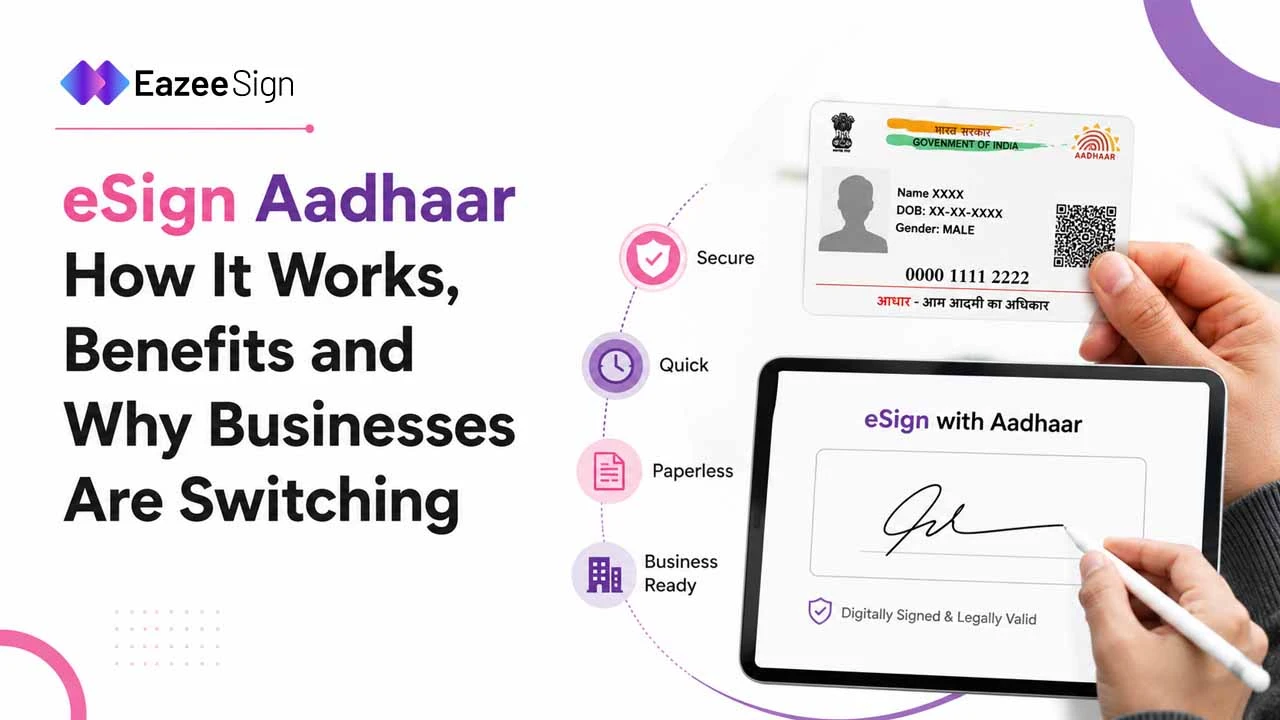
At its core, eSign Aadhaar is a method to sign any documents online using your Aadhaar number and authentication.
You don’t need to just draw the signature but your identity is verified using Aadhaar OPT or biometrics. Once you do this, your digital signature is applied to the specific document. It’s not just a visual signature, it’s backed by cryptography and legal frameworks, which makes it far more reliable than a simple image or typed name.
That difference matters, because now the document is not just “signed”, it’s authenticated.
How Aadhaar Based eSign Actually Works
The process is surprisingly short. You don’t need any setup, no hardware, no USB tokens like traditional digital signatures. Everything happens in a few steps, mostly in the background.
Here’s what usually happens:
- You receive a document link (email, SMS, or app)
- You open it and choose Aadhaar-based eSign
- Enter your Aadhaar number
- Verify using OTP or biometric
- Done, the document gets signed
That’s it. And yes, the signed document is shared back instantly.
Feels too quick. But there’s a lot happening behind the scenes.
Because once authentication is successful, a secure key pair is generated and the document is signed using cryptographic methods. That’s what ensures the document hasn’t been altered and the identity is verified properly.
Why Businesses Prefer Aadhaar eSign Today
Speed is one reason. Not the only one.
A lot of businesses earlier depended on physical paperwork. Contracts, onboarding forms, vendor agreements… everything needed signatures. And that created delays. Sometimes small, sometimes painful.
Now compare that with aadhaar based esign.
- Documents can be signed in minutes
- No physical presence needed
- Works on mobile
- No printing or scanning
That changes how teams work.
And it’s not just about speed. Cost also drops. No courier, no storage, no manual follow-ups. Even tracking becomes easier because everything is recorded digitally.
So yes, efficiency improves. But also control.
Is Aadhaar eSign Legal in India?
Short answer, Yes. Aadhaar-based eSign is legally recognized under the Information Technology Act, 2000 and later rules that define electronic authentication methods.
Which means, if the process follows the required authentication steps, the signature holds the same legal value as a handwritten one.
That includes:
- Contracts
- Agreements
- Business documents
- Internal approvals
But not everything, some documents still cannot be signed using Aadhaar eSign, like wills or certain power of attorney documents. Those exceptions exist, so it’s important to check based on use case.
Still, for most business workflows, it works fine.
Aadhaar eSign Security & Reliability
This is where things get interesting. Because people often assume digital means less secure. But in this case, it’s actually the opposite.
Aadhaar eSign is built on three key principles:
- Authentication – verifies who is signing
- Integrity – ensures document is not changed
- Non-repudiation – signer cannot deny signing later
These are not just terms. They are enforced through cryptographic processes and audit trails, which makes the system reliable for legal and business use.
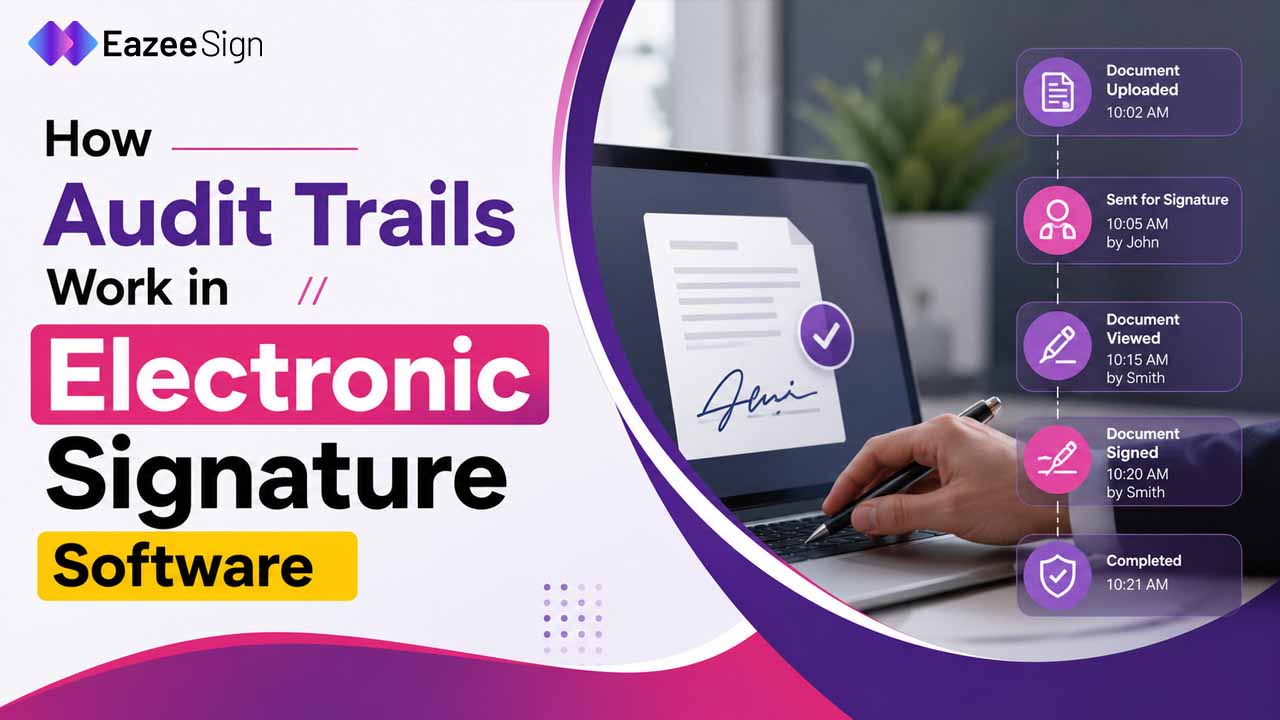
Also, every action is recorded. Time, identity, changes everything. So if something goes wrong, you have proof.
Different Ways to Use Aadhaar eSign Online
Not every platform works the same way. But broadly, aadhaar esign online is used in different formats depending on the need.
Some common use cases:
- Loan agreements
- Employee onboarding
- Vendor contracts
- Customer KYC approvals
- Government forms
Sometimes it’s embedded inside apps. Like banking or fintech apps. Other times, it’s part of a document signing platform where you upload and send documents. Either way, the process stays simple.
eSign Aadhaar vs Traditional Signing
Let’s be honest. The difference is obvious, but still, when you actually look at how both work in real situations, the gap becomes much more visible, not just in speed but in effort, follow-ups and even small things like tracking who signed and who didn’t.
Think about the usual offline process for a second.
You print the document, sign it, scan it and send it. Then wait. Sometimes the other person delays, sometimes the document gets lost in email threads and sometimes you don’t even know if they’ve opened it or not. It’s not just slow, it’s unpredictable.
Now compare that with aadhaar based esign.
You open the document. Enter Aadhaar. Verify with OTP. Done. The signed copy is shared instantly and you can even track the status in real time. No guessing. No chasing.
Here’s how the difference actually plays out:
Aadhaar eSign vs Traditional Signing
| Feature | Aadhaar eSign | Traditional Signing |
|---|---|---|
| Speed | Happens in minutes, sometimes seconds | Can take days depending on people involved |
| Location | Works from anywhere, even mobile | Requires physical presence or courier |
| Paper | Completely paperless | Needs printing, scanning, storage |
| Tracking | You can see status instantly | No visibility, mostly manual follow-up |
| Security | Cryptographic, identity verified | Depends on process, easy to tamper sometimes |
Why EazeeSign Fits for Aadhaar eSign
Aadhaar eSign is just one part of the process.
You still need a system to send documents, manage workflows, track signatures and store everything properly. That’s where platforms like EazeeSign come in.
Instead of handling documents manually, you can:
- Upload and send documents instantly
- Add multiple signers
- Track status in real time
- Set reminders automatically
- Maintain audit trails
All of this in one place and since it supports Aadhaar-based authentication, the signing process becomes both simple and compliant.
Which is what businesses actually need.
Challenges You Should Be Aware Of eSign Aadhar
It’s not perfect, nothing is. There are a few limitations with eSign Aadhar that people should know:
- Requires Aadhaar linked mobile number
- Internet access is needed
- Some document types are restricted
- Dependency on OTP delivery
These are not major issues, but they can affect certain users.
Still, for most use cases, the benefits outweigh these limitations.
Why eSign Aadhar is Becoming the Default Choice
The shift towards aadhar based esign is happening because it aligns with how businesses operate today. Remote teams, faster approvals, digital records everything needs to move quicker.
And Aadhaar eSign fits into that naturally. No training needed. No complex setup. Just open, verify, sign. That simplicity is what makes it scalable.