

In business culture, signing documents has always been a part. Earlier, documents like contracts, vendor agreements, HR paperwork, approvals and many more required a physical signature.
That usually involves various steps like printing, couriering to the concerned person, then receiving them back. Anyone who has managed the paperwork this way can understand how slow the process was.
But things work a little differently today.
Most of the businesses have now replaced this process with signing the documents digitally. Now documents move through email or cloud-based platforms and approval happens remotely by saving significant amount of time.
Because of this shift, esigning software comes to the place and many businesses have already started using them to complete their documentation work faster.
But this situation naturally raises a practical question.
Are electronic signatures actually legal in India?
And the answer is Yes, they are.
Electronic signatures are legally recognized under the Information Technology Act, 2000, which provides legal recognition to electronic records and authentication methods used in digital transactions.
That means, if the required authentication procedures are followed, in that case electronic signature on any document serves the same legal purpose as a handwritten signature.
Also Read: What is a Master Service Agreement (MSA)
Legal Recognition of Electronic Signatures Software in India
The legal framework for electronic signatures comes from the Information Technology Act, 2000.
The purpose of this law was to support electronic commerce and digital transactions. As businesses started using the internet to exchange documents and agreements, there was a need to recognize digital records legally.
That is where the IT Act plays an important role.
Under Section 4, electronic records are considered legally valid when the information remains accessible for future reference. This means if a document can be stored and accessible for future use, then this digital document can act as a physical paper document.
Then comes Section 5, which deals with signatures.
This section says that if a law needs a document to be authenticated with a signature, it can be done using an electronic signature but it should follow the prescribed procedures of the government.
The Act also explains how electronic authentication works.
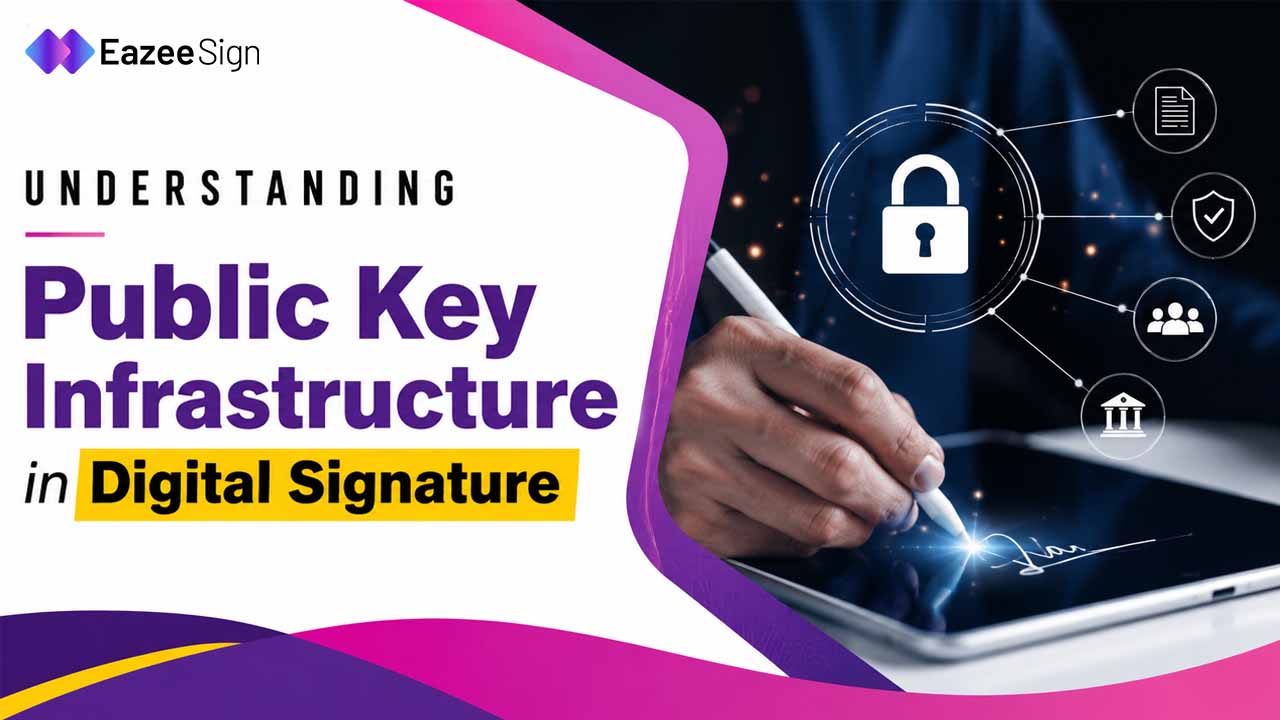
Section 3 introduces digital signatures, which use cryptographic technology involving private and public keys.
Later, Section 3A expanded the framework and allowed the government to recognize additional electronic authentication techniques.
These rules and provisions enables the businesses today that they can safely rely on the esign software and digital authentication tools for signing their agreement, contracts and other documents.
Because of these provisions, businesses today can safely rely on digital authentication tools and electronic signature software for document signing.
Source: Information Technology Act, 2000
Also Read: Digital signatures: What they are & why they matter
Key Laws That Govern Electronic Signatures in India
Electronic signatures in India are mainly governed by two legal instruments.
The first is the Information Technology Act, 2000. This law establishes the legal recognition of electronic records and electronic signatures.
The second is the Electronic Signature or Electronic Authentication Technique and Procedure Rules, 2015.
These rules define how electronic authentication techniques should work in practice.
One important method introduced through these rules is Aadhaar-based electronic authentication using e-KYC services.
In this system, the identity of a person can be verified through Aadhaar authentication, after that the person is able to generate an electronic signature. Due to this feature, it becomes possible to sign the documents remotely without any need of physical verification.
The authentication process may involve several technical steps, including:
- Aadhaar-based identity verification
- creation of cryptographic key pairs
- issuance of Digital Signature Certificates by licensed certifying authorities
- secure storage of authentication data.
These are the rules that ensure the authenticity of electronic system because it follow a standardized and secure process.
These rules ensure that electronic authentication systems follow a standardized and secure process.
Source: Electronic Signature or Electronic Authentication Technique and Procedure Rules, 2015
Also Read: Contract vs. Agreement. What’s the Difference?
Types of Legally Recognized Electronic Signatures in India
Indian law recognizes different ways to authenticate esigns created by electronic signature software.
Initially, the IT Act introduced digital signatures as the main authentication method. Later provisions allowed additional electronic authentication techniques to be specified by the government.
Let’s look at the two commonly used ones.
Digital Signatures
A digital signature is a cryptographic method used to authenticate electronic records.
Under Section 3 of the Information Technology Act, digital signatures are created using an asymmetric cryptographic system along with a hash function.
This system works with two related keys:
- a private key, used to create the signature
- a public key, used to verify the signature.
These are the keys which are know as key pair. The logic is simple behind this, a person who has to sign the document creates the signature using the private key and the another person who is verifying the documents can verify using using the public key.
This way, this process ensure that the document has not been altered one signed by the signer.
Digital signatures are issued through Digital Signature Certificates (DSCs) provided by licensed certifying authorities operating under the regulatory framework of the IT Act.
Because of this verification system, digital signature technology is widely used for regulated digital transactions.
Aadhaar-Based Electronic Signatures
Apart from digital signatures, Indian law also allows certain electronic authentication techniques.
Under Section 3A of the IT Act, the government can specify reliable electronic signature methods through official notifications.
One such method introduced through the Electronic Signature Rules, 2015 uses Aadhaar-based e-KYC authentication.
In this process, the identity of the person signing the document is verified using Aadhaar authentication systems. Once identity verification is completed, an electronic signature can be generated.
This method allows people to sign documents digitally without needing specialized hardware devices.
For businesses that manage remote documentation workflows, this kind of electronic authentication has become increasingly useful.
Source: Information Technology Act, 2000 and Electronic Signature Rules, 2015
Also Read: What is a Wet Signature?
Are Electronically Signed Documents Legally Valid?
Yes. Electronic documents can be legally valid when they follow the framework defined under the IT Act.
As mentioned earlier, Section 4 recognizes electronic records when they remain accessible for future reference.
This makes an understanding that digital documents can fulfill the same purpose as physical document if they are properly stored.
In the same way, Section 5 confirms that electronic signatures can satisfy the requirement of legal signature if the the method of authentication adhere the the procedures prescribed by the government.
One more important provision is mentioned in the Information Technology Act, 2000, i.e Section 10A, which addresses digital contracts.
According to this section, a contract cannot be considered invalid because they are accepted and communicated through electronic records.
In practical terms, this supports the use of esigning software and electronic signature software for executing contracts and agreements online.
Source: Information Technology Act, 2000
Role of Certifying Authorities in Digital Signatures
The IT Act also defines how digital signatures are issued and regulated.
Under Section 17, the Central Government appoints a Controller of Certifying Authorities (CCA). The role of this authority is to supervise organizations that issue digital signature certificates.
These organizations are known as Certifying Authorities.
According to Section 21, any entity that wants to issue electronic signature certificates must obtain a license from the Controller of Certifying Authorities.
The Controller also performs several regulatory functions, including:
- supervising certifying authorities
- defining operational standards
- specifying the format of electronic signature certificates
- maintaining records of licensed authorities.
This regulatory system ensures that digital authentication processes operate within a trusted framework.
Source: Information Technology Act, 2000
Security Requirements for Electronic Signatures
Security is an important aspect of electronic authentication.
The IT Act introduces the concept of a secure electronic signature.
Under Section 15, an electronic signature can be considered secure if the signature creation data remains under the exclusive control of the signer at the time the signature is created.
In simpler terms, the signing credentials must remain protected and accessible only to the person creating the signature.
The Act also allows the government to define security practices for handling electronic records and electronic signatures.
Under Section 16, the government can prescribe security procedures that should be followed when dealing with electronic authentication systems.
These safeguards help maintain the integrity of electronic records and prevent unauthorized changes after signing.
Source: Information Technology Act, 2000