

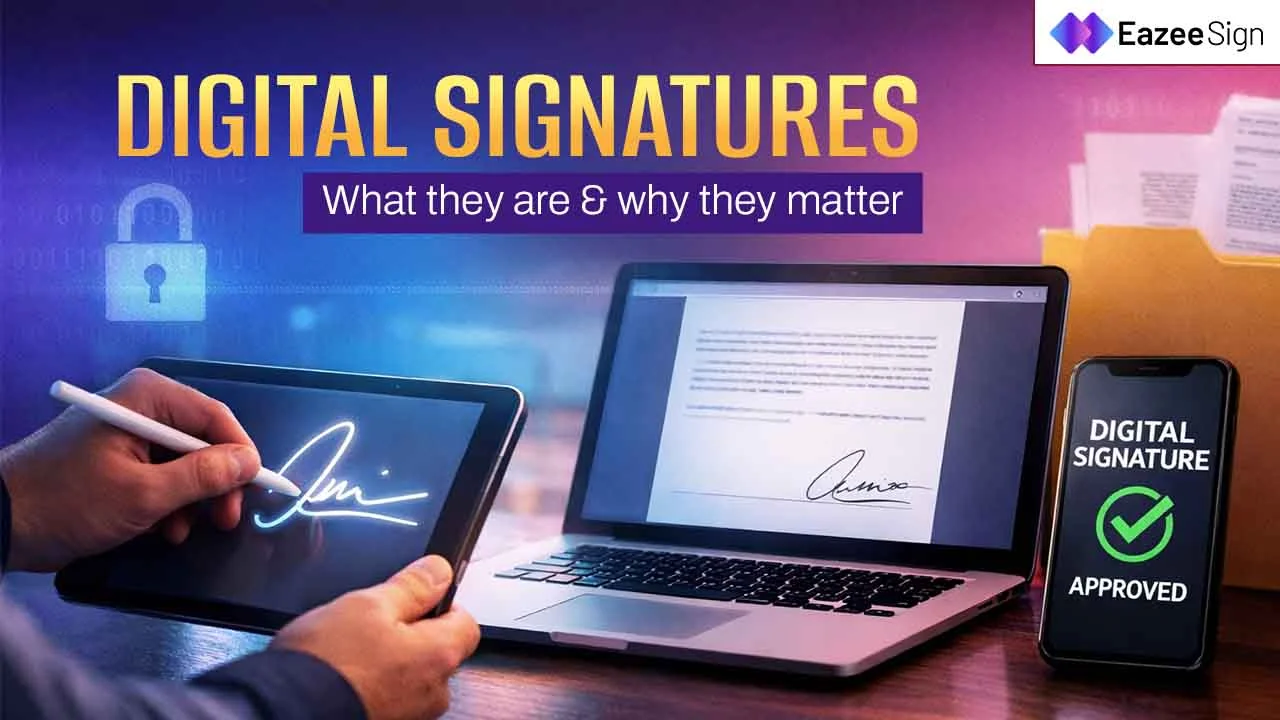
Digital signatures have become a standard part of how businesses handle documents online. But the term gets misused often. People confuse digital signatures with electronic signatures and assume it just means signing on a screen.
It’s not that simple. A digital signature is a cryptographic mechanism that verifies the authenticity, integrity, and nonrepudiation of a digital document. It goes well beyond a typed name or a scanned handwriting image.
This blog explains the real digital signature meaning, how the technology behind it works, and why it matters for security, legal compliance, and everyday business operations.
What Is a Digital Signature?
The digital signature meaning in simple words is this. It is a secure, encrypted seal on a document that proves three things.
Authenticity. It confirms who signed the document.
Integrity. It proves nothing was altered after signing.
Nonrepudiation. The signer cannot later deny they signed it.
A digital signature doesn’t look like a handwritten one. It uses cryptographic algorithms to generate a unique code tied to both the signer and the specific document content. If someone changes even one character after signing, the seal breaks and the signature becomes invalid.
Think of it as a tamperproof fingerprint embedded directly into the file. It is invisible to the eye but mathematically verifiable.
Digital Signature vs Electronic Signature
These two terms get used interchangeably. They shouldn’t be.
An electronic signature, also called an eSignature, is any electronic mark that shows intent to sign. A typed name at the bottom of an email, a checkbox, a squiggle drawn on a touchscreen. No specific technology sits behind it for verification.
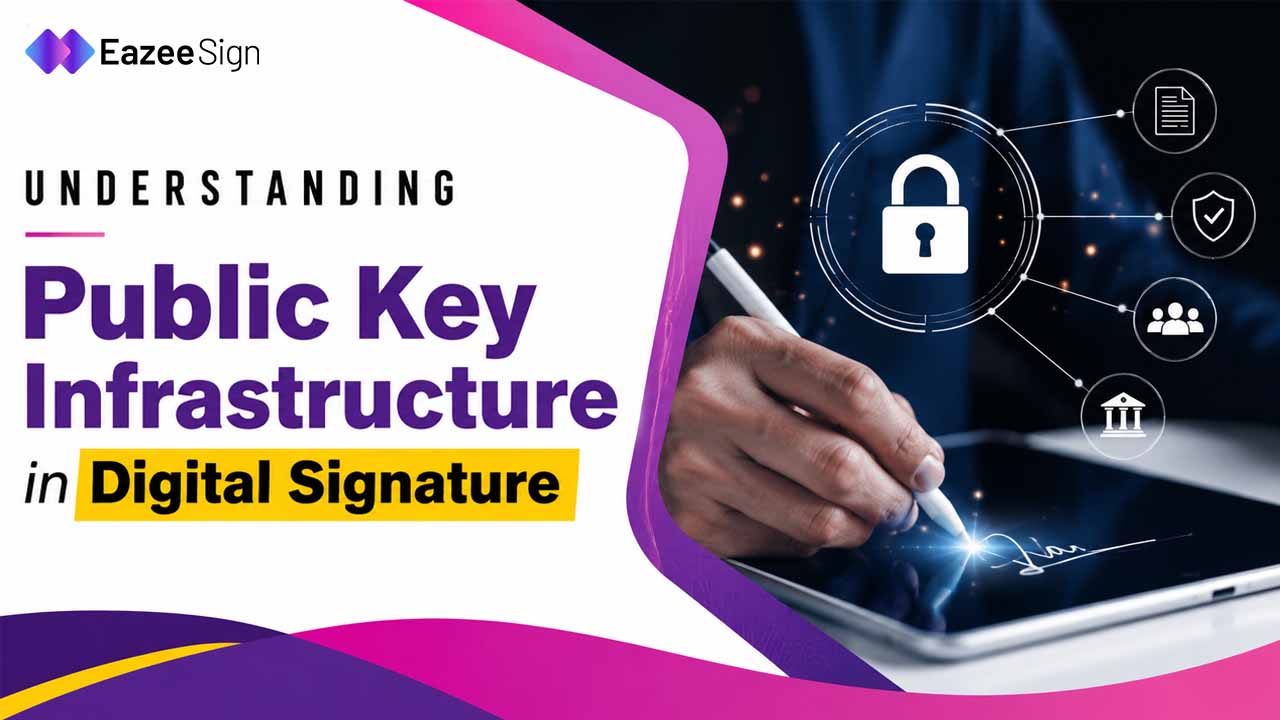
A digital signature is a specific type of electronic signature. It has cryptographic security built in. It uses public key infrastructure and hash algorithms to verify identity and detect tampering.
Electronic Signature vs Digital Signature
| Factor | Electronic Signature | Digital Signature |
|---|---|---|
| Technology | None specific | PKI + hash algorithms |
| Security | Basic | High (cryptographic) |
| Tamper Detection | Limited | Built in |
| Legal Weight | Varies | Strong (IT Act, eIDAS, ESIGN Act) |
The simple rule. All digital signatures are electronic signatures. Not all electronic signatures are digital signatures.
How Do Digital Signatures Work?
Four steps make up the digital signature process.
- Hashing the document. The signing software creates a hash of the document using a hash algorithm like SHA 256. This hash acts as a unique digital fingerprint of the file’s exact content. No two documents produce the same hash.
- Encrypting with the private key. That hash gets encrypted with the signer’s private key. This step creates the actual digital signature. The system runs on public key infrastructure, commonly known as PKI.
- Attaching the certificate. A digital signature certificate issued by a trusted Certificate Authority gets attached to the document. This certificate carries the signer’s verified identity and their public key.
- Verification by the recipient. The recipient’s software uses the signer’s public key to decrypt the hash. It generates a fresh hash of the received document and compares the two. If they match, the document is verified and untampered. If not, something was altered.
The entire process takes seconds. The signer and recipient barely notice it happening.
Why Digital Signatures Matter
Legal Validity
Digital signatures are legally recognized under the IT Act 2000 in India, the eIDAS regulation in the EU, and the ESIGN Act in the USA. Courts in many jurisdictions treat them with the same evidentiary weight as handwritten signatures. In some cases, they carry more weight due to the built in audit trail.
Document Security
Cryptographic binding between the signer and the document makes tampering instantly detectable. Change one character after signing and the signature breaks. There is no way to alter a digitally signed document without it being caught.
Fraud Prevention
PKI encryption combined with certificate based identity verification makes forgery and impersonation nearly impossible. Every digital signature traces back to a verified identity through the Certificate Authority chain.
Regulatory Compliance
Banking, healthcare, legal, and government sectors need auditable signing workflows. Digital signatures generate complete audit trails that satisfy strict compliance requirements across industries.
Workflow Efficiency
No more printing, scanning, or couriering documents for signatures. Turnaround drops from days to minutes. Teams close agreements faster with zero physical paperwork.
Remote Enablement and Sustainability
Digital signatures allow people to sign across borders and time zones without being in the same room. They cut paper consumption and courier shipments, support ESG goals, and move businesses toward a genuinely paperless office.
Bottom Line
Digital signatures bring together cryptographic security, legal recognition, and real workflow efficiency. They make online document transactions trustworthy and verifiable. For any organization dealing with contracts, compliance documents, or sensitive agreements, they solve a real problem. As more business operations shift online, understanding what digital signatures are and why they matter is not optional. It is a baseline.
If you want to secure and streamline your document workflows, exploring a trusted digital signature platform is a practical next step.